

Hi! My name is Erica Jackson, and I am a fourth-year veterinary student at Cornell University College of Veterinary Medicine. It may sound cliché, but becoming a veterinarian has been my goal since childhood. Growing up, my family nurtured my passion for animals, and our summer vacations often included visits to zoos, farms, and aquariums, where I eagerly learned about the creatures that lived there. I later attended the University of Massachusetts Amherst, where I earned my Bachelor of Science in Pre-Veterinary Medicine.
During my summer breaks from college, I sought opportunities to gain hands-on experience in the veterinary field by volunteering at animal shelters and general practices in my hometown of Toms River, New Jersey. While expanding my background in preparation for veterinary school applications, I unexpectedly came across a position as a safari park keeper. Accepting the role and working alongside hoof stock and megavertebrates solidified my passion for zoological medicine—I knew this was the field I was meant to pursue. Throughout veterinary school, I continued returning to the safari park during the majority of my academic breaks, further developing my clinical and medical expertise to prepare for a successful career in the field.
After starting veterinary school at Cornell, I began connecting with upperclassmen and faculty involved in zoological medicine. They recommended that I consider applying to Fossil Rim Wildlife Center, renowned for its exceptional standard of care for semi-free-ranging animals. At the end of my first year, I was thrilled to be offered a preceptorship, and I eagerly anticipated the opportunity for the next three years.
Fossil Rim is unique as animals roam freely across expansive landscapes, both forested and open, allowing them to display natural behaviors authentically. This semi-free-ranging setting was a major draw for me when choosing this preceptorship, as my future career will be in a safari setting. While ideal for animal welfare, such a habitat presents major challenges as well. When taking immobilizations for medical care into account, locating an animal in need at times was difficult. As hoof stock are prey species, those that are ill or injured, will often be unable to keep up with the herd and will retreat to areas where they have the ability to hide. At times, this made finding the animal more difficult than diagnosing and treating disease. Herd dynamics and the ample room to run also were considerations when formulating drug dosages used for immobilizations, as pathology can result from excessive exertion.
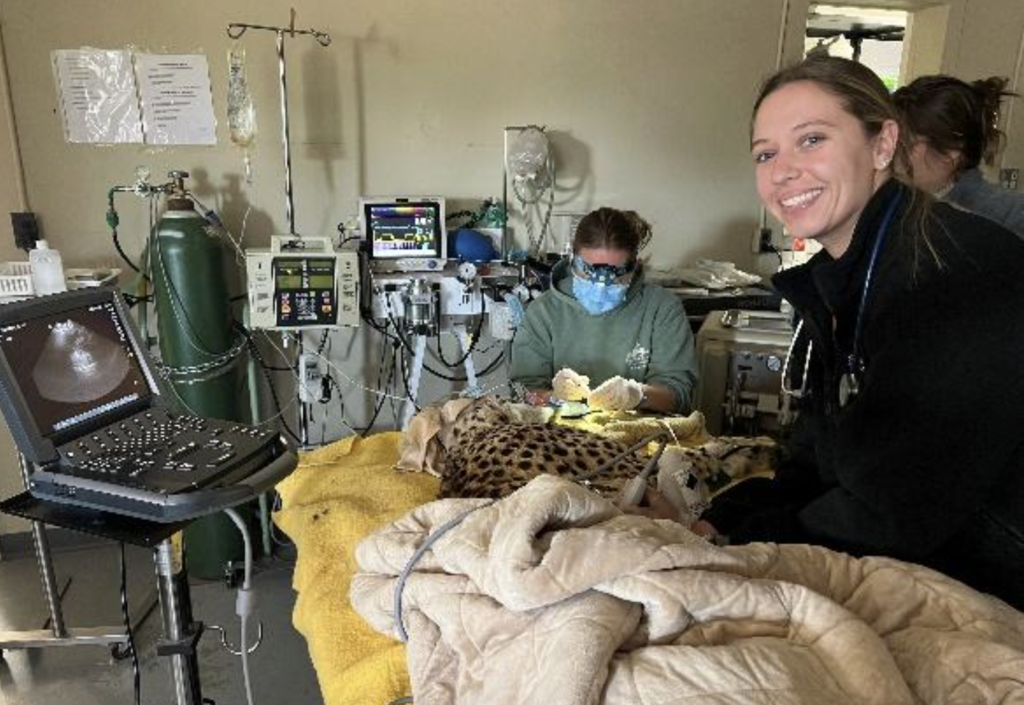
Over the past six weeks, I have participated in numerous hoof stock immobilizations and a wide range of procedures, including preventative health exams for cheetahs and black-footed cats, neonate evaluations, and wound treatments for white rhinos. Through the preventative health exams, I practiced ultrasonography and interpreted radiographs on animals presumed to be healthy.
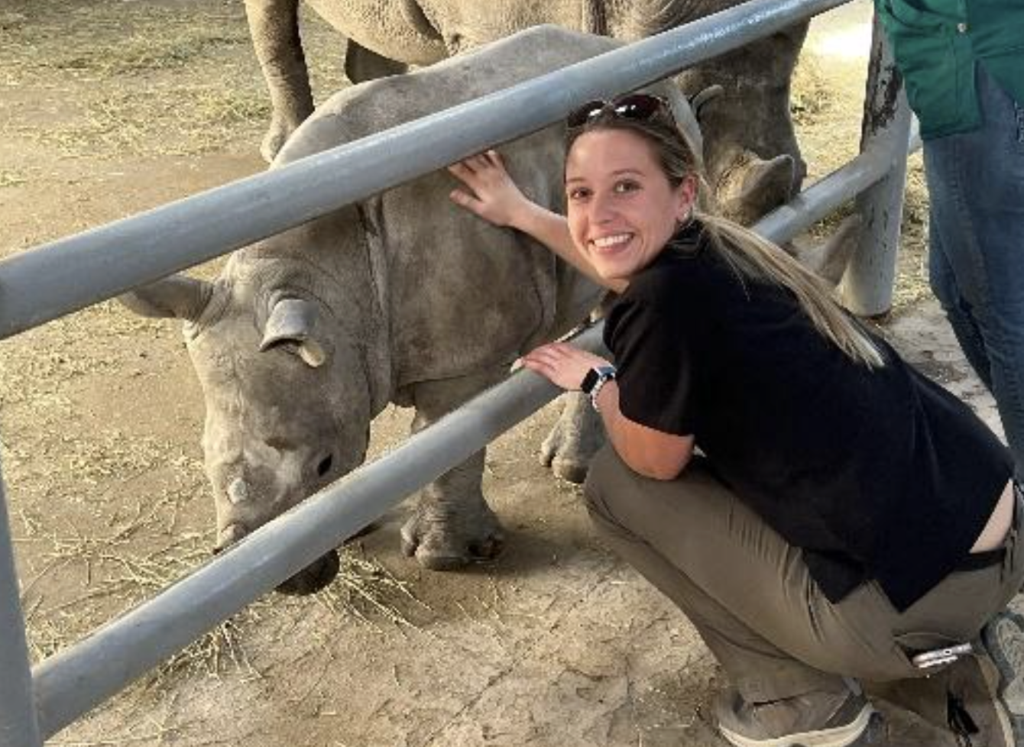
Springtime at Fossil Rim meant a constant arrival of newborns, making neonate exams essential for identification and ensuring their healthy development. Speaking of young ones, I was privileged to have Turbo bring a smile to my face, as I visited the white rhino barn.
My experience at Fossil Rim has been nothing short of incredible. When searching for a preceptorship that would build upon the knowledge I had gained in my clinical rotations and allow me to extrapolate common veterinary practices from domestic species to wildlife, Fossil Rim proved to be the perfect fit. The fast-paced schedule, coupled with the ever-evolving learning environment, fueled my passion for continuous growth and adaptability, as each day brought new challenges and discoveries. Dr. Holly Haefele, Dr. Julie Swenson, and Dr. Tori Trumble were incredibly welcoming, continuously challenging me with thought-provoking questions that expanded my clinical reasoning and knowledge base. The outstanding licensed veterinary technicians, Allyssa Roberts and Rachel Lambert, significantly enhanced my clinical and anesthesia monitoring skills. Additionally, the Animal Care staff taught me invaluable practices for animal restraint and daily husbandry techniques essential for managing the park’s diverse species. The past six weeks will be ones I never forget!