

With over 1,100 animals, 13 antelope species, and various deer roaming the pastures, you might spot an intriguing outlier on your drive through our four pastures. Featuring large, swept-back horns, it looks like a cross between a sheep and a goat. In reality, it is neither. You are looking at an Aoudad (pronounced “aw-dad”), also known as the Barbary sheep. Native to North Africa, these unique caprines are closely related to wild sheep and goats, yet they belong to a distinct genus all their own (Ammotragus).
Stocky and robust, the Aoudad features a sandy, dusty-tan coat accented by a long, flowing fringe of hair running from its throat down through its chest and front legs, often referred to as its “mane” or “chaps.” If you take a close look at their eyes, you will notice horizontal, rectangular pupils. Set on the sides of their head, these specialized pupils rotate independently to stay parallel with the ground, giving the Aoudad a panoramic, nearly 360-degree field of view to spot predators on rocky terrain even while grazing.
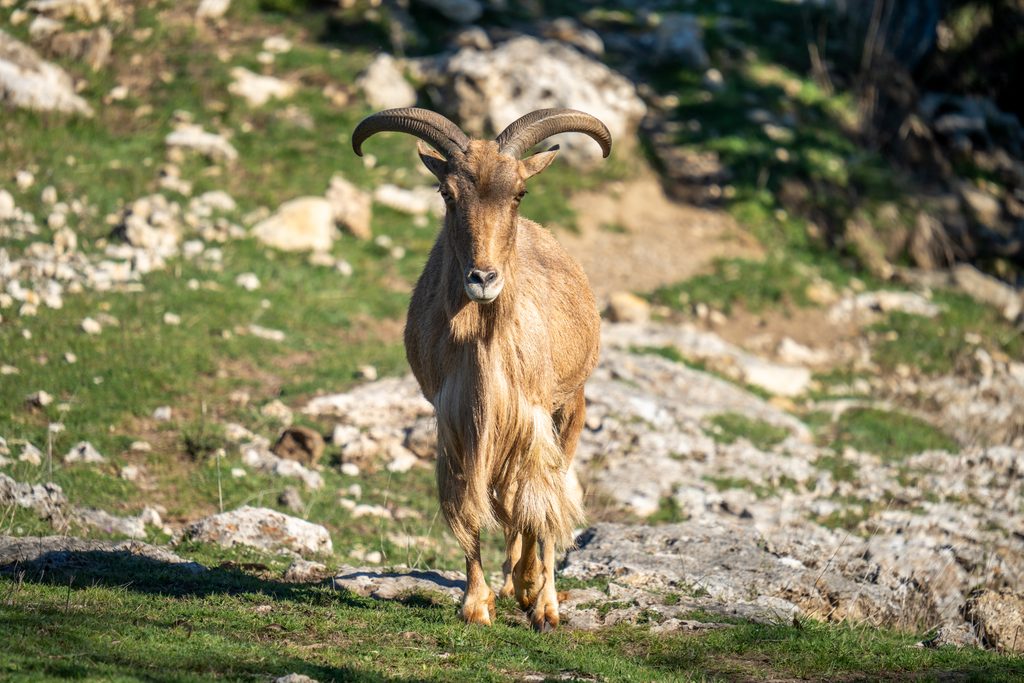
Aoudads are built to scale rocky cliffs and dry mountainous terrain. They are exceptionally agile climbers, using specialized hooves, featuring sharp outer edges and soft, rubbery pads to balance and grip in unorthodox locations. Spending so much of their time in the mountains also gives them the ability to adapt to extreme hot and cold conditions. Like many African hoofstock species, they are able to get much of their water from the plants they eat and can go five days or more without directly drinking water.
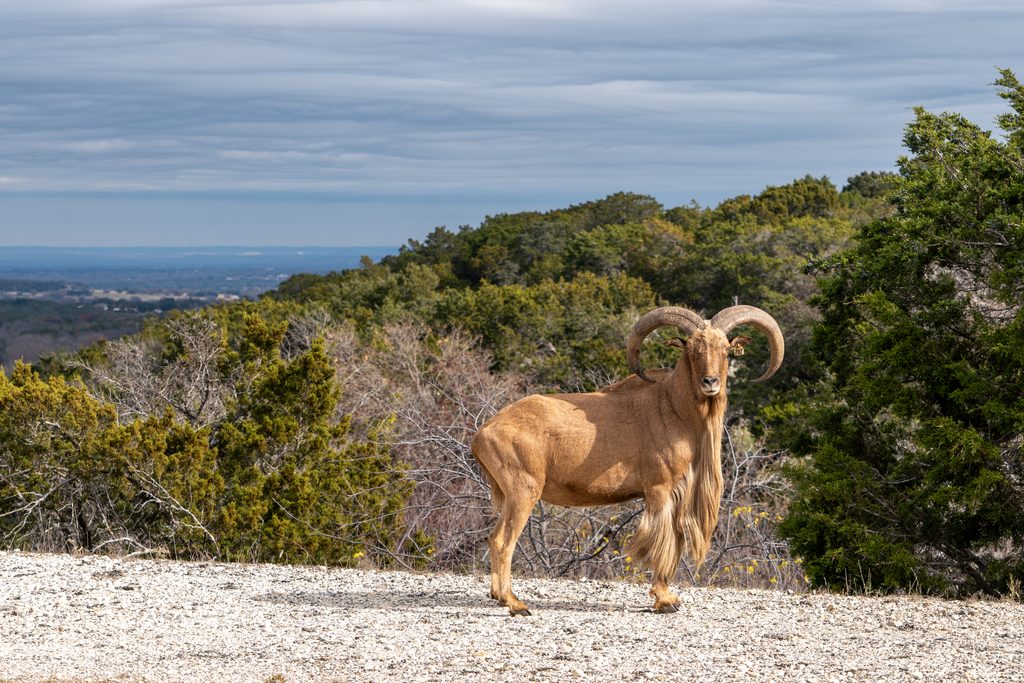
Generic aoudads have thrived in captivity, which ultimately resulted in excess populations that were used to establish herds on private and public lands. Today, they can be found free-ranging in states like California, New Mexico, and down in the Big Bend region of Texas. The generic aoudads are what you will see out in the pastures, Fossil Rim also hosts the Kordofan aoudad, a subspecies that is slightly lighter in color, with a longer nose and eyes that are spaced a little further apart. Generic Aoudads are not endangered, Kordofan aoudads are, which is why Fossil Rim supports this unique subspecies.
Make sure to look for the aoudads when you pass through the preserve pasture on your next visit, and let us know if you can tell the difference between these subspecies.