

One of Fossil Rim’s most iconic species, the Attwater’s prairie chicken (APC), has officially been accepted as part of a SAFE program through the Association of Zoos and Aquariums (AZA). SAFE, or Saving Animals From Extinction, is a specialized program dedicated to protecting threatened species, collaborating with other teams and improving field and reintroduction efforts. As one of the most endangered birds in North America, this acknowledgement will play a big role in future conservation efforts. However, the journey to this point (and the path forward) is complex. To better understand the labels and committees dedicated to this little bird, Kristina del Pino Borgstrom, Fossil Rim’s Avian Animal Care Specialist and one of the program’s partner representatives, guided us through the process of getting the plan up and running.
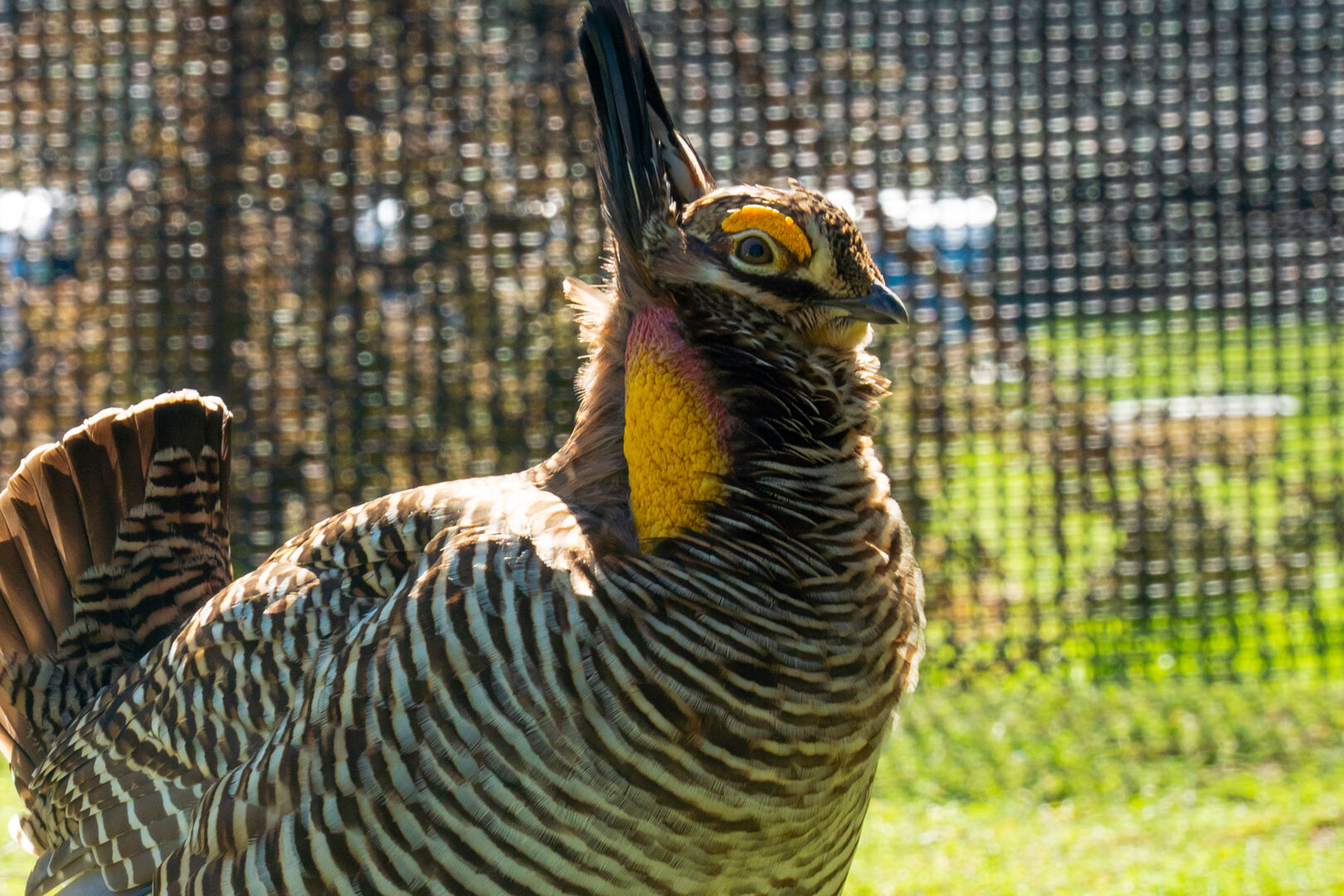
Fossil Rim’s journey with APCs started back in 1992, when Fossil Rim acquired our first few prairie chickens after working with the U.S. Fish and Wildlife Service to establish and develop a program to help curb the extinction rate of the species. Eventually, other facilities joined us in partnership, creating a Steering Committee that Kristina says finetuned our husbandry techniques and increased the success of the program. This success led to over 6,000 healthy birds born in human care being released back into the wild as of 2025.
For many years, the APC was part of a Species Survival Program, or SSP. Established in 1981, SSPs were created to help maintain genetically diverse animal populations in zoos and aquariums. They focused on conservation through breeding, making recommendations for pairings that would result in the healthiest offspring. At its peak, there were more than 500 SSPs.
In 2023, the program was reevaluated, determining that the “one size fits all” approach that had been used to that point wasn’t successful in meeting every species’ unique conservation needs. Additionally, the volume and diversity of SSPs meant resources were spread thin and conservation plans were inevitably changing. As part of a greater project to remedy this, new criteria were created to determine if a species is eligible for an SSP program. Animals that didn’t fit this criteria, like the Attwater’s prairie chicken, no longer qualified for SSP designation.
At first glance, removing an endangered species from a conservation program may seem counterintuitive, but this opened the door for teams to join other, more personalized programs also sponsored by AZA. For instance, SAFE, also known as Saving Animals From Extinction. Launched in 2015, SAFE programs emphasize protecting threatened species, collaborating with other teams and improving field and reintroduction efforts. SSPs and SAFE programs are not mutually exclusive, meaning some animals, like cheetahs, may benefit from both. Species Survival Plans focus heavily on building and maintaining healthy populations in human care, while SAFE programs extend a bit more into conservation of habitat and sustaining wild populations.
Kyle McAuliffe of the Houston Zoo suggested pitching the APC for a SAFE program. Together with the team at Fossil Rim, as well as other partner facilities, a proposal was submitted to a committee within the AZA in early 2024. The proposal was accepted a few months later, and the real work began. According to Kristina, 2025 was dedicated to the formation of their SAFE program, a 3-year plan featuring an outline of measurable and attainable conservation goals that advanced the already established APC recovery plan. This was submitted again in late 2025, and officially approved by the AZA in December, making the Attwater’s prairie chicken an official SAFE program participant.
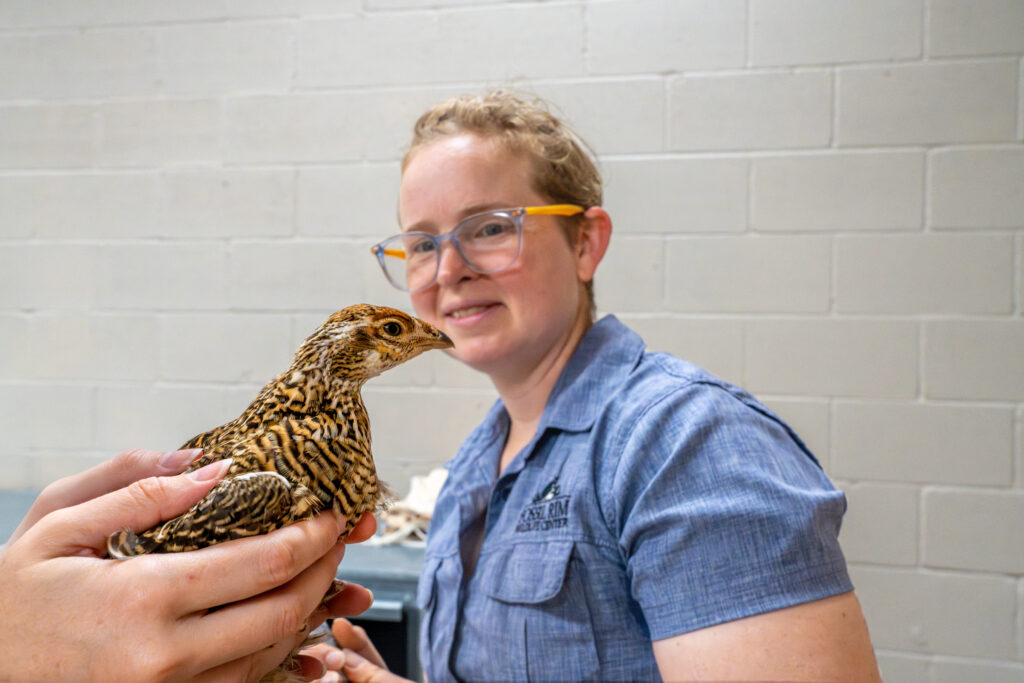
So what does this mean for the species? According to Kristina, the day-to-day work being done to save the birds won’t change much. It does, however, provide the team access to things like specialized grants and perhaps bring more focus to the little-known species. “While the number of programs under SAFE are still low,” says Kristina, “this gives the approved programs a new spotlight that could have been clouded over by the hundreds of programs in an SSP.”
Visibility is important in conservation, as public education is required to attract partners, funds, and to get the public’s help in protecting habitat. The SAFE program practices a “One Plan Approach,” where both wild and captive populations are considered in a conservation plan. This allows for enhanced communication between facilities and better overall results.
“Being involved in conservation programs like SAFE helps unify all the participating partners to identify achievable goals and… other programs that we can work more with in the future, such as other prairie grassland conservation initiatives,” says Kristina. “What we do to help conserve the APC has a positive impact on the local wildlife that also call the coastal prairies home.”